The Adaptive Use of AI-Guided Calculators in STEM Education: Revolutionizing Science & Mathematics Learning
The Adaptive Use of AI-Guided Calculators in STEM Education: Revolutionizing Science & Mathematics Learning
Every student learns differently—some grasp physics concepts through visual demonstrations, others through mathematical proof, and still others through real-world applications. Traditional STEM education has struggled with this diversity, often presenting material in a one-size-fits-all format that leaves some students behind while boring others who need greater challenges. AI-guided calculators represent a transformative solution, providing personalized learning pathways that adapt to each student's knowledge level, learning style, and pace. These intelligent tools don't just compute answers—they teach, explain, adapt, and inspire deeper understanding of science and mathematics.
Understanding Adaptive AI in Education
Adaptive learning systems represent a paradigm shift from static educational content to dynamic, responsive teaching that adjusts in real-time based on student interaction. At the heart of these systems lies continuous assessment—the AI observes how users interact with problems, noting which concepts they grasp quickly and where they hesitate or make errors.
Through this observation, AI assesses knowledge level without intrusive testing. When a student uses a physics calculator to solve projectile motion problems, the AI notes whether they understand the difference between horizontal and vertical components, whether they correctly apply kinematic equations, and whether they grasp how gravity affects trajectory. This passive assessment builds a nuanced profile of understanding.
Real-time adjustment of explanation complexity follows naturally. A ninth-grader learning basic velocity concepts receives straightforward explanations using everyday language and simple examples—"velocity is how fast something moves in a specific direction." A college engineering student working with the same calculator receives technically precise explanations referencing vector components, derivatives, and frame of reference considerations.
Scaffolding, a core educational concept, involves progressive complexity increase as understanding deepens. An AI-guided [scientific calculator](/calculator/scientific) might initially show only basic arithmetic operations. As the user demonstrates mastery, it reveals trigonometric functions. Later still, it introduces logarithms, complex numbers, and statistical operations—each layer building on previously mastered concepts.
Consider how a [physics calculator](/calculator/physics) might explain acceleration differently across skill levels. For beginners: "Acceleration is how quickly velocity changes—like how fast a car speeds up." For intermediate learners: "Acceleration equals the change in velocity divided by time, measured in meters per second squared." For advanced students: "Acceleration is the time derivative of velocity, or the second derivative of position with respect to time, representing the rate of change of the velocity vector."
The role of explainable AI (XAI) in educational contexts cannot be overstated. Students don't just need correct answers—they need to understand why those answers are correct and how to arrive at them independently. AI that shows its work, explains its reasoning, and provides context transforms calculators from answer machines into teaching assistants.
AI-Guided Mathematics Calculators
Mathematics education has long struggled with the gap between computation and comprehension. Students could follow algorithms to solve equations but often lacked deep understanding of underlying concepts. AI-guided mathematics calculators bridge this gap by going beyond computation to focus on understanding the "why" behind every answer.
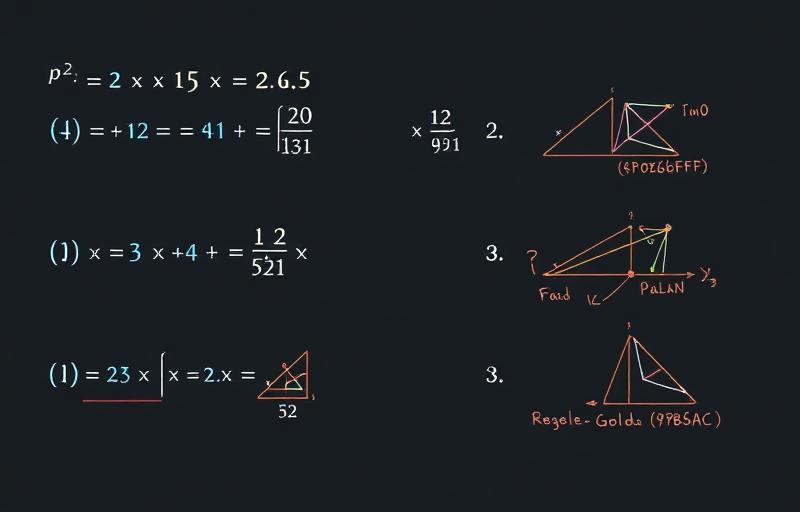
Step-by-step solution breakdowns transform opaque calculations into transparent learning experiences. When a [compound interest calculator](/calculator/compound-interest) shows that $10,000 grows to $16,289 in 10 years at 5% annual interest, the AI doesn't just display the result. It breaks down each year's calculation:
The AI then explains: "Notice how the amount added each year increases—that's the 'compound' part of compound interest. In Year 1, you earned $500. In Year 2, you earned $525 because you're now earning interest on last year's interest. This acceleration is why Einstein reportedly called compound interest the eighth wonder of the world."
Multiple solution methods accommodate diverse learning styles. Some students prefer algebraic manipulation, others geometric interpretation, and still others numerical approaches. An intelligent calculator presents all three, letting students engage with the method that resonates with their cognitive style.
Visual representations of algebraic concepts make abstract mathematics concrete. Quadratic equations become parabolas students can see and manipulate. Exponential growth transforms into dramatic curves that vividly demonstrate acceleration. Linear systems become intersecting lines where solutions are obvious visual intersections.
Integration with curriculum standards (Common Core, International Baccalaureate, A-Levels) ensures AI explanations align with what students are learning in class. The calculator uses terminology and approaches consistent with their coursework rather than introducing conflicting methods.
Real-time error detection and corrective feedback prevents students from practicing mistakes. When a student incorrectly applies the order of operations, the AI doesn't just mark it wrong—it identifies the specific error: "It looks like you added before multiplying. Remember PEMDAS: Parentheses, Exponents, Multiplication and Division (left to right), Addition and Subtraction (left to right)."
Consider this scenario: A student uses a [loan calculator](/calculator/loan) to understand amortization schedules. They input a $200,000 loan at 6% for 30 years. The AI provides:
Formula explanation: "Monthly payment = P × [r(1+r)^n] / [(1+r)^n – 1], where P = principal, r = monthly interest rate, n = number of payments"
Each variable defined:
Step-by-step calculation: Shows the substitution and arithmetic leading to monthly payment of $1,199.10
Graph showing exponential decay: Visual representation of principal balance decreasing over time
Real-world context: "In the first payment, $1,000 goes to interest and only $199.10 to principal. By year 15, it's roughly 50-50. In the final years, nearly all of each payment reduces the principal. That's why making extra payments early saves so much interest!"
This comprehensive approach transforms a simple calculator into a powerful learning tool that builds both computational skills and conceptual understanding.
AI in Physics & Astronomy Education
Physics and astronomy present unique educational challenges—the concepts are often counterintuitive, the mathematics sophisticated, and real-world demonstrations limited by practical constraints. AI-guided calculators make abstract concepts tangible through intelligent interpretation and adaptive explanation.
Newton's Laws, fundamental to classical mechanics, become accessible through everyday examples tailored to student interests. For a student interested in sports, a [physics calculator](/calculator/physics) might explain Newton's Second Law (F = ma) using a basketball: "When you shoot a basketball, the force your hands apply and the ball's mass determine its acceleration. A heavier ball requires more force to reach the same speed—that's why switching from a youth-size to a regulation ball feels so different."
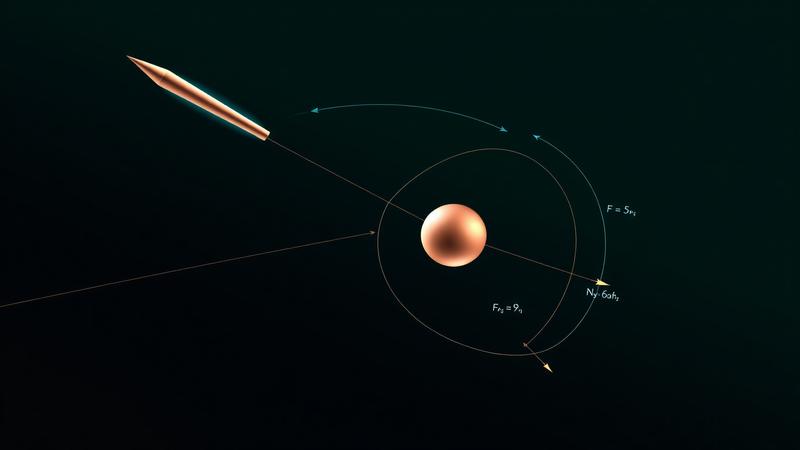
Kinematic equations, which describe motion mathematically, gain clarity through visual motion diagrams. When solving a projectile motion problem, the AI doesn't just compute the answer—it generates a parabolic trajectory diagram showing the object's path, velocity vectors at key points, and how horizontal and vertical motions combine.
Astronomical calculations involving cosmic distances challenge human intuition. A [astronomy calculator](/calculator/astronomy) converting light-years to kilometers doesn't just perform multiplication—it provides scale comparisons that make the unimaginable comprehensible: "Proxima Centauri is 4.24 light-years away. That's 40.1 trillion kilometers. If you could drive there at highway speed (100 km/hr), the trip would take 45.7 million years. If Earth were a marble, Proxima Centauri would be another marble 680 kilometers away."
Unit conversion intelligence with automatic context detection prevents common student errors. When a student enters "100" in a velocity problem, the AI asks: "Is that 100 meters per second, kilometers per hour, or miles per hour?" This seemingly simple question teaches dimensional analysis—a critical skill in physics and engineering. The [unit converter](/calculator/unit-converter) becomes a teaching tool that reinforces the importance of units in scientific calculation.
Interactive problem-solving with AI hints supports the learning process without simply giving away answers. Consider a student struggling with this problem: "A ball is thrown horizontally from a 20-meter cliff at 15 m/s. How far from the cliff base does it land?"
The AI detects hesitation and offers progressive hints:
This scaffolded support teaches problem-solving strategies while preserving the satisfaction of reaching the solution independently.
Visual diagrams automatically generated for physics concepts transform abstract mathematical relationships into concrete representations. Free body diagrams appear with arrows representing forces, their relative lengths indicating magnitude. Energy bar charts show kinetic and potential energy exchange in mechanical systems. Circuit diagrams illustrate current flow and voltage drops.
The combination of adaptive explanation, visual representation, and interactive problem-solving makes physics accessible to students who previously found it impenetrably abstract.
Personalized Learning Pathways
Perhaps the most powerful aspect of AI-guided calculators is their ability to create personalized learning pathways that adapt to each student's unique needs—all while respecting privacy through edge AI processing that keeps data on-device.
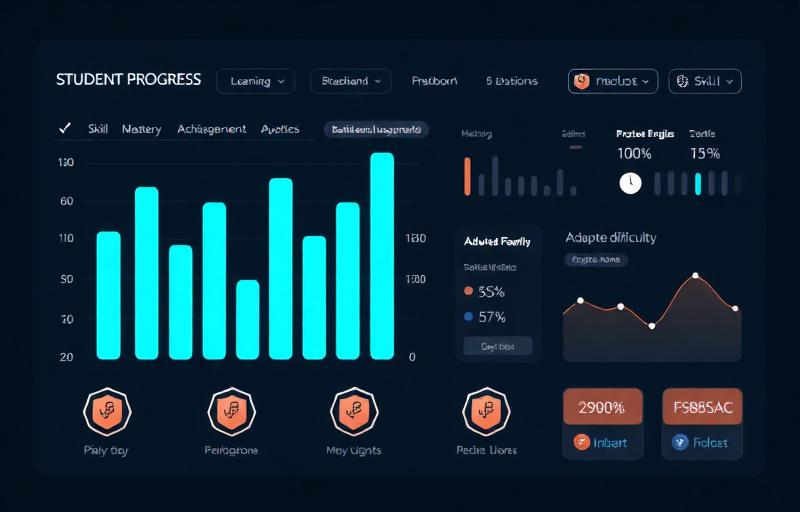
Knowledge gap identification happens through pattern analysis. If a student consistently struggles with problems involving fractions but excels at decimal calculations, the AI recognizes this specific gap. Rather than recommending generic "mathematics review," it targets fraction fundamentals specifically.
Adaptive difficulty progression ensures students are always challenged but never overwhelmed—the optimal learning zone educators call "productive struggle." When a student easily solves three consecutive problems, the AI slightly increases complexity. If they struggle with two consecutive problems, difficulty decreases and additional explanation is provided.
Concept mastery verification before advancing prevents the common problem of students moving forward with incomplete understanding that creates cascading difficulties later. Before introducing calculus, the AI ensures algebraic fluency. Before advanced trigonometry, basic angle relationships must be solid.
Spaced repetition algorithms maximize long-term retention by strategically reintroducing previously learned concepts at optimal intervals. A student who learned exponential functions in September sees those concepts again in November problems—not arbitrarily, but because research shows this timing strengthens memory consolidation.
Personalized practice problem generation creates unlimited exercises tailored to individual needs. No two students receive identical problem sets—each sees examples targeting their specific knowledge gaps and interests. A student interested in space exploration receives astronomy-themed mathematics problems. One passionate about sports sees physics problems involving athletic scenarios.
Learning style adaptation recognizes that visual, auditory, and kinesthetic learners need different presentation approaches. Visual learners receive abundant graphs, diagrams, and color-coded explanations. Auditory learners benefit from text-to-speech explanations that can be repeated. Kinesthetic learners get interactive simulations where they manipulate variables and observe results.
A critical privacy consideration: edge AI processing performs all this personalization locally on the user's device. Learning data, performance metrics, and adaptation algorithms run client-side—no sensitive student information leaves the device. This privacy-preserving approach enables powerful personalization without creating security risks or privacy concerns.
Accessibility & Inclusive STEM Education
AI-guided calculators have transformative potential for making STEM education accessible to students with disabilities and those facing educational barriers.

Voice-activated calculators for students with visual impairments enable full participation in mathematics and science. A student can speak "Calculate the area of a circle with radius 5 meters" and receive both spoken response and detailed audio explanation of the calculation process. Screen reader optimization ensures assistive technologies work seamlessly with calculator interfaces.
Multiple representation modes (text, audio, visual) let students engage with content in whichever format works best for their needs. A deaf student might prefer visual animations showing wave interference patterns that hearing students understand through sound. A blind student accesses the same content through audio descriptions of the interference pattern characteristics.
Language translation for multilingual learners breaks down language barriers to STEM education. A recent immigrant whose native language is Spanish can use calculators that provide explanations in both English and Spanish, gradually building English technical vocabulary while maintaining access to content understanding.
Simplified explanations for students with learning disabilities strip away unnecessary complexity while preserving conceptual accuracy. Dyslexic students benefit from dyslexia-friendly fonts and formatting. Students with attention disorders receive information in manageable chunks with clear structure and minimal distraction.
Keyboard shortcuts for students with motor skill challenges enable full calculator functionality without precise mouse control. Tab navigation, keyboard-triggered calculations, and voice input provide alternative interaction methods that accommodate diverse physical abilities.
AI serves as the great equalizer in STEM education—providing individualized support, multiple access modalities, and adaptive difficulty that together ensure every student can engage with science and mathematics at their highest potential level. The [BMI calculator](/calculator/bmi) used in health education or the [date calculator](/calculator/date) used for teaching time concepts become accessible to all students regardless of physical, cognitive, or linguistic challenges.
Real-World Applications & Career Connections
One of AI-guided calculators' most valuable educational functions is connecting abstract STEM concepts to real-world applications and career paths—helping students understand why these subjects matter beyond earning grades.
Engineering applications of physics calculators make theory tangible. When students use [automotive calculators](/calculator/automotive) to analyze fuel economy, they're applying thermodynamics, energy conversion, and efficiency calculations used by mechanical engineers daily. Understanding projectile motion isn't just a physics exercise—it's fundamental to aerospace engineering, robotics, and sports equipment design.
Financial mathematics for business careers demonstrates how algebraic skills translate to professional competence. A [ROI calculator](/calculator/roi) teaches percentage calculations, time value of money, and comparative analysis—core competencies for business analysts, entrepreneurs, and financial planners. Students see that mathematical abstraction has concrete monetary value.
Currency conversion and international trade mathematics connect to global commerce careers. A [currency converter](/calculator/currency) isn't just about vacation planning—it's essential for international business, import-export operations, and foreign exchange trading. Understanding exchange rates, conversion fees, and arbitrage opportunities opens career pathways in global finance.
Astronomy calculators for aerospace and research careers inspire students considering STEM paths. Calculating cosmic distances, orbital mechanics, and astronomical phenomena demonstrates the mathematics underlying space exploration—potentially sparking interest in aerospace engineering, astrophysics, or planetary science careers.
Understanding how professional tools work demystifies career pathways. Engineers use sophisticated simulation software, but the underlying principles are identical to those in educational calculators. Financial analysts use Bloomberg terminals, but the calculations are the same compound interest and present value formulas students learn. By mastering calculator fundamentals, students build confidence that professional tools are within their reach.
This career connection transforms student motivation. Rather than wondering "when will I ever use this?", students see direct pathways from classroom learning to professional competence. AI-guided calculators make these connections explicit, showing students how today's lesson becomes tomorrow's career skill.
The Future of AI in STEM Education
Looking ahead, several emerging technologies will further enhance AI-guided educational calculators' capabilities and impact.
Virtual lab simulations integrated with AI calculators will let students conduct experiments impossible in traditional classrooms—mixing dangerous chemicals safely, observing geological processes that take millennia, or exploring quantum phenomena requiring million-dollar equipment. The AI explains real-time how calculations relate to observable simulation results.
Augmented and virtual reality enhanced visualization will make abstract concepts physically manipulable. Students could "grab" a mathematical function and reshape it, seeing how parameter changes affect the curve. Three-dimensional protein folding becomes a hands-on puzzle rather than textbook diagrams. Atomic orbitals become explorable spaces rather than abstract probability clouds.
Collaborative AI-guided problem-solving will enable students to work together while receiving individualized hints and explanations. The AI monitors group dynamics, ensures all participants engage, and provides targeted support where each student needs it—combining social learning benefits with personalized adaptation.
Teacher dashboard analytics (when implemented with appropriate privacy protections) could show educators which concepts their class struggles with, enabling targeted instruction. These insights would come from aggregated, anonymized usage data rather than individual student surveillance.
Quantum computing concepts, currently accessible only to graduate students, could become comprehensible to motivated high school students through AI-guided explanation and progressive complexity management. As cutting-edge science becomes increasingly computational, AI calculators will make new frontiers accessible to learners at earlier stages.
The vision is clear: AI-guided calculators will continue evolving from answer-providing tools to comprehensive learning companions that adapt, explain, inspire, and empower every student to reach their highest STEM potential—regardless of learning style, ability level, or background.
Start exploring adaptive STEM calculators today and experience how artificial intelligence can transform mathematics and science from intimidating subjects into accessible, engaging learning adventures.
Educational Disclaimer: All AI-guided calculators are educational tools designed to support learning. They supplement but do not replace classroom instruction, qualified teachers, or structured curricula. Students should use these tools as learning aids while engaging fully with their formal education programs.
© 2026 Cabier Universe / CALCULATORiQ™ Editorial Team
Related Articles

Molecular Architecture: VSEPR Theory and the Three-Dimensional Nature of Chemical Bonding

Molecular Collisions and Reaction Rates: The Physics Behind Chemical Transformations