TL;DR
- The Dangote Refinery, at 650,000 barrels per day, is the largest single-train refinery in the world and is projected to eliminate $10 billion of Nigeria's $14 billion annual petroleum import bill within three years of full operation
- Nigeria, Africa's largest oil producer, spent decades exporting crude and reimporting refined products at enormous cost, a pattern rooted in colonial-era extractive architecture that enriched trading houses like Trafigura, Vitol, and Glencore
- Zimbabwe, Namibia, the DRC, and Malawi have implemented export bans or beneficiation requirements on critical minerals including lithium, cobalt, and rare earths, representing the most significant resource nationalism shift since OPEC's formation
- China has invested over $4.6 billion in African mining, while the US and EU are competing through the Minerals Security Partnership and Critical Raw Materials Act respectively, creating a three-way contest that African governments are leveraging for better terms
- The African diaspora represents an estimated $95 billion in annual remittances to the continent, and the Dangote model is redirecting diaspora capital from consumption support toward infrastructure investment and equity participation
- Shell and TotalEnergies face mounting legal and reputational consequences for decades of Niger Delta operations, with Nigerian courts and international tribunals increasingly willing to assign liability
- The African Continental Free Trade Area, combined with the demographic dividend of the world's youngest continent, positions Africa for structural economic transformation if sovereignty gains are institutionalized before global attention returns to the continent
Why This Matters Now
For sixty years, Nigeria pumped crude oil from the Niger Delta, loaded it onto tankers, shipped it to refineries in Rotterdam and Houston, and then purchased the refined products back at import prices. Africa's largest oil producer could not refine its own petroleum. The country that sat on 37 billion barrels of proven reserves spent $14 billion annually importing diesel, kerosene, and gasoline. This was not an accident. It was architecture.
The architecture was colonial in origin and post-colonial in maintenance. European trading houses built profitable businesses on the arbitrage. International financial institutions structured loans that reinforced dependency. Successive Nigerian governments, compromised by corruption and co-opted by the same trading networks, allowed four state-owned refineries to deteriorate into non-operation. The Central Bank of Nigeria estimates that petroleum import dependency drained approximately $200 billion from the national economy over two decades.
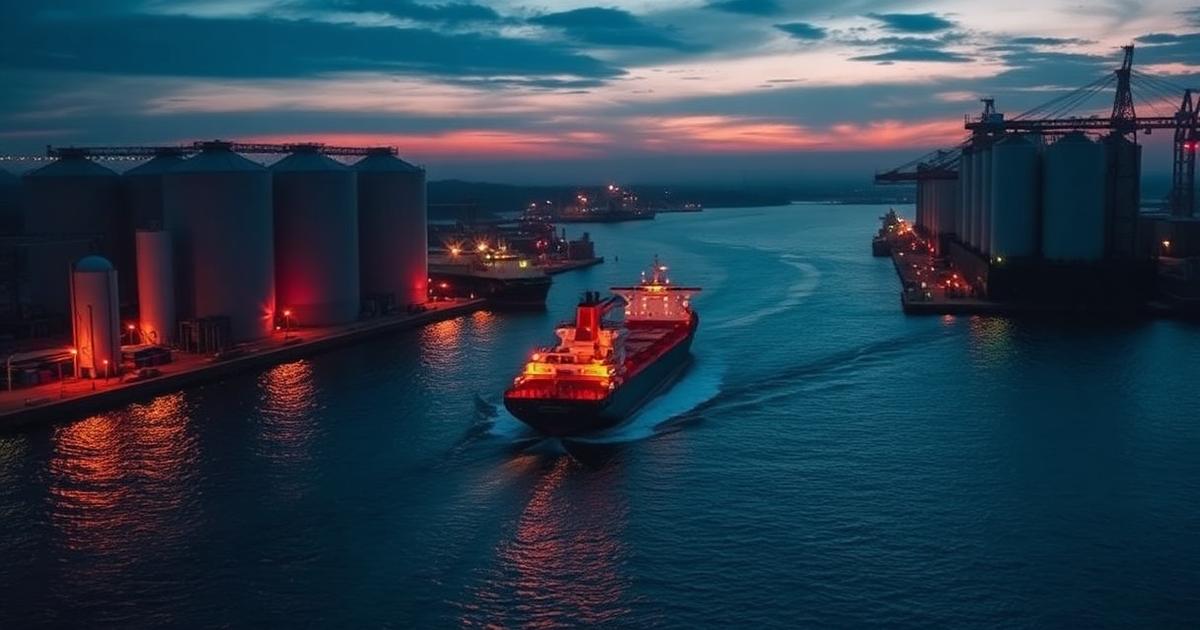
In 2023, Aliko Dangote, Africa's wealthiest individual, opened the gates of a $19 billion refinery complex in the Lekki Free Trade Zone outside Lagos. At 650,000 barrels per day, it is the largest single-train refinery in the world. It processes Nigerian crude into Nigerian fuel for Nigerian consumption, and increasingly, for export across West Africa and into the Atlantic Basin. The refinery is not merely an industrial facility. It is a repudiation of sixty years of extractive economics, and it is operational.
This analysis is part of a synchronized intelligence brief published across the Luminaire editorial network. Strategic risk assessments are available through Cabier Consulting, and portfolio modelling tools through FinanceTrackerIQ.
The Architecture of Dependency
The story begins not with Dangote but with the system he is dismantling. Nigeria's petroleum sector was structured during the colonial era and its immediate aftermath to function as an extraction point rather than a processing centre. British Petroleum, which would later become BP, and Royal Dutch Shell established operations in the Niger Delta in the 1950s. The infrastructure they built, pipelines, flow stations, export terminals, was designed to move crude out of the country as efficiently as possible. Refining capacity was an afterthought, and the afterthought was never seriously pursued.
Four state-owned refineries were constructed between 1965 and 1989 in Port Harcourt, Warri, and Kaduna. Their combined nameplate capacity was approximately 445,000 barrels per day. By 2020, their actual output had fallen to near zero. The reasons were predictable: systematic corruption in maintenance contracting, political appointments to management positions, theft of refined product from pipeline networks, and a broader political economy in which powerful actors benefited from the import model. The Nigerian National Petroleum Corporation became a vehicle for patronage rather than industrial development.
The beneficiaries of this arrangement were not difficult to identify. Trading houses including Trafigura, Vitol, Glencore, and Mercuria built multi-billion-dollar businesses on the round trip: purchasing Nigerian crude at extraction prices, processing it at European or Asian refineries, and selling refined products back to Nigeria at import premiums. The Chatham House Africa Programme documented that this circular trade generated annual margins of $3 to $5 per barrel for intermediaries on volumes exceeding 400,000 barrels per day. For trading houses, Nigeria's refinery dysfunction was not a problem to be solved but a market condition to be preserved.
International financial institutions reinforced the pattern. World Bank structural adjustment programmes in the 1980s and 1990s recommended privatization of state refineries but simultaneously liberalized import licensing, making it more profitable to import refined products than to invest in domestic refining capacity. The International Monetary Fund's Article IV consultations consistently noted Nigeria's "refining gap" as a risk factor but offered prescriptions, deregulation, subsidy removal, that addressed symptoms while leaving the extractive architecture intact.
The Refinery: Facts, Figures, and Forward Momentum
The Dangote Refinery occupies 2,635 hectares in the Lekki Free Trade Zone, approximately 60 kilometres east of Lagos. Construction began in 2013 and required over $19 billion in investment, making it one of the largest private industrial projects in African history. The facility includes a 650,000 barrel-per-day crude distillation unit, a 900,000 metric-ton-per-year polypropylene plant, and a fertilizer complex capable of producing 3 million metric tons of urea annually.
The numbers tell a structural story. Nigeria's petroleum import bill peaked at approximately $14 billion in 2022. The refinery, at full capacity, is projected to reduce that figure by $10 billion within three years. The remaining $4 billion reflects speciality products and lubricants that the refinery does not initially produce but plans to incorporate in expansion phases. The balance-of-payments impact is immediate and measurable: foreign exchange that previously flowed to European and American refiners now remains within the Nigerian economy.
The refinery processes multiple crude grades, including Nigerian Bonny Light, Forcados, and Qua Iboe, as well as imported crudes when domestic supply is insufficient. Its product slate includes gasoline, diesel, jet fuel, and liquefied petroleum gas. The facility has its own port infrastructure capable of receiving Very Large Crude Carriers, eliminating dependency on Nigeria's congested public port system.
The export dimension is where the refinery's impact extends beyond Nigeria. West Africa imports approximately 1.2 million barrels per day of refined products, primarily from European refineries. The Dangote facility's surplus capacity, once domestic demand is met, positions it as a regional export hub competing directly with refineries in the Netherlands, Spain, and India for West African market share. The International Energy Agency has noted that this reorientation could reshape Atlantic Basin refined product trade flows within 24 to 36 months of full operation.
The fertilizer component deserves separate attention. Nigeria imports approximately $2.5 billion in fertilizer annually despite possessing abundant natural gas for ammonia synthesis. The Dangote fertilizer plant, already operational, has begun exporting urea to Brazil, India, and the United States, making Nigeria a net fertilizer exporter for the first time in its history. This reversal, from import dependency to export capacity, in a commodity essential to food security carries implications beyond economics.
The Diaspora Dimension
The African diaspora represents an estimated $95 billion in annual remittances to the continent, according to the World Bank's Migration and Development Brief. Nigeria alone receives approximately $20 billion annually, making diaspora remittances the country's second-largest source of foreign exchange after oil exports. Historically, these flows funded consumption: school fees, medical bills, housing improvements for family members.
The Dangote model is shifting this calculus. The refinery's success has catalysed a conversation within diaspora communities about capital allocation toward productive infrastructure rather than consumption support. Nigerian diaspora investment networks in London, Houston, and Toronto report increased interest in domestic industrial opportunities, particularly in downstream petroleum, agriculture processing, and critical minerals beneficiation.
The generational signal is significant. For decades, the dominant narrative among educated Africans was that serious economic opportunity required leaving the continent. The refinery, along with parallel developments in fintech, where Nigeria's Flutterwave and Paystack have achieved valuations exceeding $1 billion, provides a counter-narrative: that transformative economic participation is possible within Africa, and that the returns on domestic investment may exceed those available in saturated Western markets.
The risk, acknowledged by diaspora economists at the Brookings Institution's Africa Growth Initiative, is that this enthusiasm outpaces institutional development. Capital flows without governance reform, contract enforcement mechanisms, and transparent regulatory frameworks can reproduce the same extractive patterns under domestic ownership. The question is whether Nigeria's institutional capacity is evolving at the same pace as its industrial ambition.
The Second Front: Rare Earth Minerals and the Sovereignty Movement
The Dangote Refinery is the most visible expression of African economic sovereignty, but it is not the only front. Across the continent, governments are implementing policies that fundamentally alter the terms on which foreign actors access African resources. The critical minerals sovereignty movement represents the most significant challenge to the extractive model since the formation of OPEC in 1960.
Zimbabwe moved first. In December 2022, the government banned the export of unprocessed lithium, requiring all lithium ore to be processed domestically before export. Zimbabwe holds approximately 2.5% of global lithium reserves, but the policy's significance lay in its precedent-setting nature rather than its immediate market impact. The message was clear: the era of exporting raw materials at extraction prices while importing processed products at industrial margins was ending.
Namibia followed in June 2023, restricting the export of unprocessed critical minerals including lithium, cobalt, manganese, graphite, and rare earth elements. The directive required beneficiation within Namibia, meaning that minerals must undergo at least initial processing before leaving the country. The Namibian government cited the example of Botswana's diamond industry, where domestic cutting and polishing requirements transformed a raw materials exporter into a value-added processing hub.
The Democratic Republic of Congo, which produces approximately 70% of the world's cobalt, has moved toward requiring domestic processing of cobalt concentrate. The DRC's cobalt is essential for lithium-ion batteries used in electric vehicles and consumer electronics. Chinese companies, particularly CMOC and Zijin Mining, have invested billions in DRC mining operations but have faced increasing pressure to establish processing facilities within the country rather than shipping concentrate to Chinese refineries.
Malawi has implemented beneficiation requirements for its rare earth deposits, particularly at the Kangankunde and Songwe Hill projects. The government has signalled that mining licences will be conditional on demonstrated plans for domestic processing capacity, a requirement that increases project costs but retains a larger share of value within the Malawian economy.
These policies are not without risk. Export bans can deter investment if foreign companies conclude that the regulatory environment is too unpredictable. Processing facilities require electricity, water, skilled labour, and transport infrastructure that may not exist at sufficient scale. The Centre for Strategic and International Studies has noted that several African countries lack the technical workforce and power generation capacity to support industrial-scale mineral processing in the near term. The sovereignty movement's success depends not merely on restricting exports but on building the domestic industrial capacity to absorb them.
The Geopolitical Contest
Africa's critical minerals are the subject of a triangular competition between China, the United States, and the European Union. Each actor brings different tools, different timelines, and different vulnerabilities to the contest.
China's engagement with African mining is the most advanced. Chinese state-owned and private companies have invested over $4.6 billion in African mining operations across cobalt, lithium, copper, and rare earth projects. China controls approximately 60% of global rare earth processing capacity and has built integrated supply chains that run from African mines through Chinese refineries to Chinese manufacturing facilities. The Belt and Road Initiative provided infrastructure financing, roads, railways, ports, that facilitated mineral extraction, creating a model where infrastructure investment and resource access were mutually reinforcing.
The United States entered the contest later but with increasing urgency. The Minerals Security Partnership, launched in 2022, seeks to build alternative supply chains for critical minerals outside Chinese control. The US has signed bilateral agreements with the Democratic Republic of Congo and Zambia focused on electric vehicle battery supply chains, and the Export-Import Bank has expanded its mandate to finance mining and processing projects in Africa. The Inflation Reduction Act's requirement that EV battery minerals be sourced from countries with US free trade agreements has created additional incentive for American engagement with African mineral producers.
The European Union's Critical Raw Materials Act, adopted in 2024, targets domestic processing of 40% of Europe's strategic mineral needs by 2030. However, Europe currently depends on African extraction for significant portions of its cobalt, manganese, and rare earth supply. The EU's approach combines trade agreements with sustainability requirements, conditioning market access on environmental and labour standards that some African governments view as a new form of conditionality.
The dynamic that African governments are exploiting is straightforward: when three major powers compete for access to the same resources, the supplier's negotiating leverage increases. Kinshasa can play Washington against Beijing. Harare can leverage Brussels against both. The competition does not guarantee favourable outcomes for African populations, capital can flow to elites rather than communities, but it provides structural bargaining power that was absent when any single external actor dominated.
The Distracted World Thesis
There is a temporal dimension to Africa's sovereignty assertions that deserves examination. The export bans, beneficiation requirements, and industrial investments of 2022 to 2026 are occurring during a period of extraordinary global distraction. The United States is consumed by domestic political polarization, a presidential transition, and military commitments in the Middle East and Eastern Europe. The European Union is managing the economic consequences of the Ukraine war, energy transition pressures, and rising populism. China is navigating a property sector crisis, demographic decline, and deteriorating relations with the West.
This collective distraction has created a window during which African governments have been able to implement structural policy changes without facing the coordinated opposition that similar moves might have provoked in previous decades. When Indonesia banned nickel ore exports in 2020, it faced immediate trade challenges from the European Union at the World Trade Organization. African export bans have, to date, generated commentary but not comparable legal or diplomatic pushback.
The thesis, articulated by analysts at the Brookings Institution and the Mo Ibrahim Foundation, suggests that the structural changes being implemented during this window, export bans, beneficiation requirements, domestic refining capacity, will prove difficult to reverse even when global attention returns to the continent. A refinery that is already processing 650,000 barrels per day cannot be un-built. A lithium processing facility that has begun operations in Harare cannot be easily relocated. The distracted world may return its attention to Africa, but it will find a different Africa than the one it left.
The Western Reckoning
The sovereignty movement carries consequences for Western corporations and institutions that operated under the previous extractive model. The reckoning is most visible in the petroleum sector, where Shell and TotalEnergies face mounting legal, financial, and reputational challenges related to decades of Niger Delta operations.
Shell's environmental liabilities in the Niger Delta are substantial and growing. The company has acknowledged responsibility for thousands of oil spills across the delta region, contaminating farmland, fisheries, and drinking water sources for communities numbering in the millions. Nigerian courts have awarded damages in multiple cases, and the Supreme Court of the United Kingdom ruled in 2021 that Shell could be sued in British courts for Nigerian environmental damage. The total liability exposure, combining existing judgments, pending litigation, and potential class action claims, has been estimated at $5 to $15 billion by legal analysts at Allen and Overy.
TotalEnergies faces parallel challenges. The company's East African Crude Oil Pipeline project, running from Uganda through Tanzania, has drawn opposition from environmental groups, human rights organizations, and the European Parliament. The project involves land displacement, environmental risk, and carbon emissions that conflict with Total's stated climate commitments. African civil society organizations, increasingly sophisticated in their use of international legal mechanisms, are challenging the project through both domestic courts and international forums.
The broader institutional reckoning involves the International Monetary Fund and the World Bank. Both institutions provided the intellectual framework and policy prescriptions that sustained the extractive model through structural adjustment, trade liberalization, and conditional lending. The World Bank's own Independent Evaluation Group has acknowledged that its programmes in resource-rich African countries frequently failed to translate resource extraction into broad-based economic development. The question being posed by African economists and policymakers is whether these institutions can reform themselves sufficiently to support rather than obstruct the sovereignty movement.
What Comes Next: Projections Toward 2030
The Dangote Refinery's expansion plans include petrochemical facilities that would produce polyethylene and polypropylene for domestic and export markets. A second refining train has been discussed, which would bring total capacity above one million barrels per day. The fertilizer plant is already scaling production, with export contracts signed with buyers in Brazil, India, Mexico, and the United States. If these expansions proceed on schedule, Nigeria will transition from Africa's largest petroleum importer to one of its largest refined product exporters within five years.
The African Continental Free Trade Area, which entered its operational phase in 2021, provides the institutional framework for intra-African trade in refined products, processed minerals, and manufactured goods. The agreement covers 54 of 55 African Union member states and creates a single market of 1.3 billion people with a combined GDP exceeding $3.4 trillion. The AfCFTA's rules of origin provisions encourage domestic processing by reducing tariffs on products with significant African value addition.
The demographic dimension is perhaps the most consequential. Africa's population is projected to reach 2.5 billion by 2050, making it the world's youngest and fastest-growing continent. The median age across the continent is approximately 19, compared to 38 in the United States, 44 in Europe, and 48 in Japan. This demographic structure represents either a dividend or a disaster, depending on whether economic opportunity expands to absorb the entering workforce. The sovereignty movement's ultimate test is whether resource nationalism translates into industrialization, employment, and broadly shared prosperity.
The risks are substantial. Governance failures could redirect sovereignty gains to domestic elites rather than populations. Infrastructure deficits in power generation, transport, and digital connectivity constrain industrial capacity. Climate change threatens agricultural productivity across the Sahel and East Africa. Currency volatility and sovereign debt burdens limit fiscal space for public investment. The path from resource sovereignty to economic transformation is neither guaranteed nor linear.
But the structural facts have changed. A refinery that processes 650,000 barrels per day is operational. Export bans on critical minerals are in force across multiple jurisdictions. Domestic processing facilities are under construction. Diaspora capital is beginning to flow toward productive infrastructure. The extractive model that defined Africa's economic relationship with the world for sixty years is being challenged not by rhetoric but by concrete, operational alternatives.
Related CALCULATORiQ Tools
- Crisis Exposure and Oil Shock Calculator Model how refining capacity shifts affect regional petroleum pricing
- Oil Impact Household Calculator Calculate household exposure to refined product price changes
Frequently Asked Questions
What is the Dangote Refinery and why does it matter for Africa?
The Dangote Refinery is a 650,000 barrel-per-day petroleum refining complex located in the Lekki Free Trade Zone outside Lagos, Nigeria. Built by Aliko Dangote at a cost of approximately $19 billion, it is the largest single-train refinery in the world. Its significance lies in breaking a colonial-era pattern where Africa's largest oil producer exported crude and reimported refined products at enormous cost. Nigeria was spending approximately $14 billion annually on petroleum imports despite being a top-ten global crude producer. The refinery is projected to eliminate $10 billion of that import bill within its first three years of full operation, fundamentally altering Nigeria's balance of payments and establishing Africa's first export-capable refining hub.
Why did Nigeria import refined petroleum despite being an oil producer?
Nigeria's petroleum import dependency is a legacy of colonial and post-colonial economic architecture. During the colonial period and its immediate aftermath, the extractive model channelled raw materials from Africa to European and American processing facilities, with finished products sold back to African markets at significant markup. Four state-owned refineries in Port Harcourt, Warri, and Kaduna were built in the 1960s through 1980s but were systematically neglected through corruption, mismanagement, and a political economy that benefited from import dependency. Trading houses such as Trafigura, Vitol, and Glencore built profitable businesses on the arbitrage of selling refined products to a country sitting on crude reserves. The Central Bank of Nigeria estimates the import dependency drained approximately $200 billion over the past two decades.
What is the African critical minerals sovereignty movement?
The African critical minerals sovereignty movement is a coordinated effort by several African governments to ban or restrict the export of unprocessed rare earth minerals and critical resources. Zimbabwe banned raw lithium exports in 2022, followed by Namibia restricting unprocessed critical minerals in 2023. The Democratic Republic of Congo has moved toward requiring domestic processing of cobalt. Malawi has implemented beneficiation requirements for rare earth deposits. These policies collectively represent a strategic assertion that the value chain for critical minerals, essential for electric vehicles, semiconductors, and renewable energy infrastructure, should generate economic returns within Africa rather than enriching foreign processors. The movement draws direct inspiration from Botswana's diamond beneficiation model and represents the most significant resource nationalism shift since OPEC's formation.
How does the Dangote Refinery affect global oil markets?
The Dangote Refinery introduces several structural changes to global oil markets. First, it redirects Nigerian crude that was previously exported for processing, keeping approximately 650,000 barrels per day within West Africa's refining ecosystem. Second, it creates an export-capable refined products hub, potentially competing with European and Middle Eastern refiners for West African and Atlantic Basin market share. Third, it disrupts the trading house model that profited from buying Nigerian crude at extraction prices and selling refined products back to Nigeria at import prices. Fourth, it establishes price discovery within Africa, reducing the premium that African consumers paid on imported refined products. The International Energy Agency has noted that the refinery's full operation could reshape Atlantic Basin refined product flows within 24 to 36 months.
What is the geopolitical contest over African critical minerals?
The geopolitical contest involves three primary actors competing for access to African critical mineral resources. China has invested over $4.6 billion in African mining operations and controls significant processing capacity for lithium, cobalt, and rare earths. The United States launched the Minerals Security Partnership and has engaged in bilateral agreements, particularly with the Democratic Republic of Congo and Zambia, to secure cobalt and copper supply chains. The European Union's Critical Raw Materials Act targets 10% of its strategic mineral needs from domestic processing but remains heavily dependent on African extraction. This triangular competition plays out against African governments increasingly asserting sovereignty over their own resources, creating a dynamic where access requires partnership terms rather than extraction concessions.
What is the Distracted World Thesis in relation to African sovereignty?
The Distracted World Thesis argues that Africa's sovereignty assertions in 2025 and 2026 are succeeding partly because the world's major powers are preoccupied with other crises. The United States and European Union are focused on the war in Ukraine, Middle East conflict escalation, and domestic political transitions. China's economic slowdown has redirected Beijing's diplomatic bandwidth. This collective distraction has created a window during which African governments have been able to implement resource nationalism policies, renegotiate mining concessions, and establish domestic processing requirements without facing the coordinated opposition that similar moves might have provoked in previous decades. The thesis suggests that the structural changes being implemented during this window, particularly export bans and beneficiation requirements, will prove difficult to reverse even when global attention returns to the continent.
Continue Your Intelligence Briefing
- The Haber-Bosch Theory and the Straits That Feed the World (Fracture Lines Series)
- The Mistakes of War and Oil: Venezuela, Iran, and the Costs of Miscalculation (Fracture Lines Series)
- Who Benefits from the Burning World and Why We Fund It (Fracture Lines Series)
Torchlight Insight
- The Dangote Refinery eliminates approximately $10 billion of Nigeria's $14 billion annual petroleum import bill, representing the single largest balance-of-payments correction in African economic history
- Africa's critical minerals sovereignty movement, spanning Zimbabwe, Namibia, the DRC, and Malawi, represents the most significant resource nationalism shift since the formation of OPEC in 1960
- The three-way competition between China, the United States, and the European Union for African mineral access has increased African governments' negotiating leverage to levels not seen in the post-colonial period
- Shell's Niger Delta environmental liabilities are estimated at $5 to $15 billion, with UK Supreme Court rulings establishing jurisdiction for Nigerian communities to pursue claims in British courts
- The African Continental Free Trade Area creates a single market of 1.3 billion people with $3.4 trillion in combined GDP, providing institutional infrastructure for intra-African trade in processed resources
- The Distracted World Thesis suggests that structural changes implemented during the current period of global crisis distraction, including export bans and domestic refining capacity, will prove irreversible once established
This article was researched and written by human editors with analytical assistance from AI tools. All conclusions, interpretations, and editorial decisions are independently reviewed by the CALCULATORiQ Editorial Team before publication.
For questions about our editorial process, see our Editorial Standards page.
Share this brief