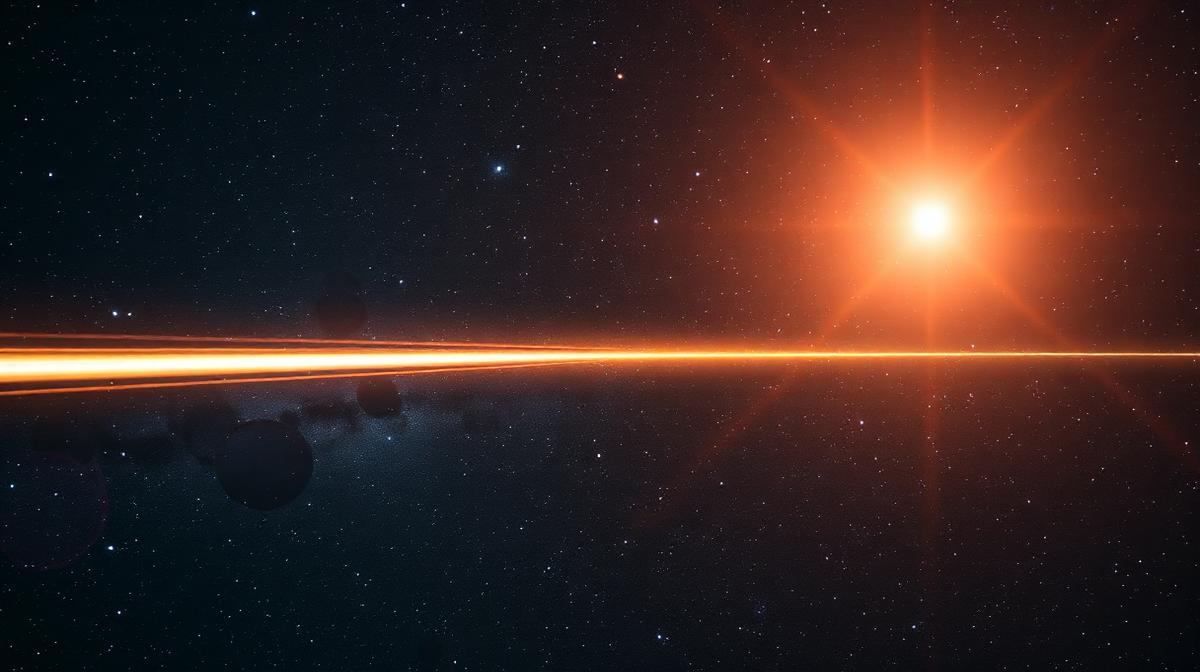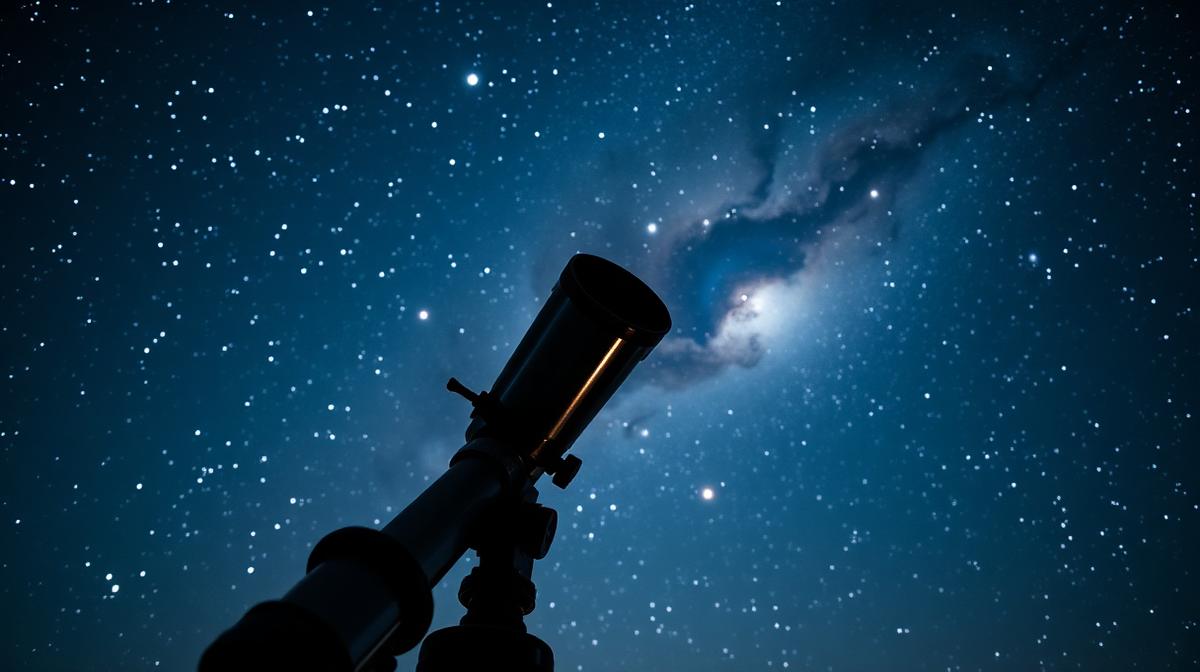
Astronomy calculations unlock the universe's scale—transforming abstract numbers into comprehensible cosmic perspectives. Understanding light-years, astronomical units, and celestial mechanics enables meaningful engagement with space exploration, exoplanet discovery, and our place in the cosmos. Whether you're a student, amateur astronomer, or space enthusiast, mastering these measurements makes the infinite accessible.
Understanding Light-Years and Cosmic Distance
A light-year measures the distance light travels in one year at 299,792 kilometers per second—approximately 9.46 trillion kilometers. Alpha Centauri, our nearest stellar neighbor, sits 4.37 light-years away. Voyager 1, humanity's most distant spacecraft after 46 years of travel, has covered only 0.0026 light-years. This scale reveals why interstellar travel remains theoretical—crossing even the nearest star system would require thousands of years with current technology.
Astronomical Units: Mapping the Solar System
The Astronomical Unit (AU) equals Earth's average distance from the Sun: 149.6 million kilometers. This provides a manageable scale for solar system measurements. Mercury orbits at 0.39 AU, Mars at 1.52 AU, Jupiter at 5.2 AU, and Neptune at 30 AU. When news reports say an asteroid will pass "0.05 AU from Earth," that's 7.5 million kilometers—20 times the Moon's distance, indicating a safe passage.
Key Astronomical Calculations
- Parsec Conversion: 1 parsec = 3.26 light-years = 206,265 AU. Professional astronomers use parsecs for galactic measurements.
- Angular Diameter: Calculate apparent size of celestial objects. The Moon spans 0.5° despite being 384,400 km away.
- Orbital Period: Use Kepler's Third Law to determine how long planets take to orbit stars based on distance.
- Escape Velocity: Calculate speed needed to break free from planetary gravity. Earth requires 11.2 km/s.
- Magnitude Scale: Convert between apparent brightness and actual luminosity. A magnitude 1 star is 2.5× brighter than magnitude 2.
AI-Powered Astronomical Analysis
Traditional astronomy calculations require complex formulas and unit conversions. Our Astronomy Calculator uses AI_AstroSense to simplify these calculations while providing educational context. Enter a star's distance in light-years, and the AI explains travel time at various speeds, compares to familiar objects, and calculates observational delays—light from Betelgeuse, 640 light-years away, left during the Renaissance, meaning we see the star's 1380s state in 2025.
Exoplanet Discovery and Characterization
Over 5,500 exoplanets have been discovered, most using transit photometry (detecting brightness dips as planets pass in front of stars) or radial velocity (measuring stellar wobble from planetary gravity). Our calculator helps characterize these worlds: if an exoplanet orbits 0.05 AU from its star (much closer than Mercury), orbital period is approximately 5-10 Earth days. If the star is dimmer and cooler than our Sun, this close orbit might still permit liquid water—the "habitable zone" shifts based on stellar temperature.
Observational Astronomy Applications
Amateur astronomers use calculations for practical observations: determining optimal viewing times for planets, calculating telescope magnification requirements for specific objects, estimating satellite visibility windows, and planning deep-sky photography exposures. If you want to photograph the Andromeda Galaxy (2.5 million light-years away), knowing its 3° angular size helps select the right telescope focal length and camera sensor combination.
Relativistic Effects and Extreme Distances
At cosmic scales, relativistic effects matter. Light from the most distant observed galaxy traveled 13.4 billion years to reach us—but due to universal expansion, that galaxy now sits 34 billion light-years away. Time dilation means a hypothetical spacecraft traveling at 90% light speed would experience time slower than Earth—a 10-year journey for the crew equals 23 years on Earth. These calculations transform science fiction concepts into quantifiable physics.
Unit Conversion Mastery
Astronomy requires fluid conversion between measurement systems. Our Unit Converter handles: kilometers to light-years, AU to parsecs, stellar magnitudes to luminosity ratios, and angular measurements (degrees, arcminutes, arcseconds). The Hubble Space Telescope resolves details as small as 0.05 arcseconds—like distinguishing two fireflies 2 meters apart from 10,000 kilometers away.
Educational Applications
Astronomy calculations bring abstract concepts to life for students. Comparing Earth's 8 light-minutes from the Sun to Neptune's 4 light-hours illustrates solar system scale. Calculating how long it takes messages to reach Mars rovers (4-24 minutes depending on orbital positions) explains why real-time control is impossible. Use our Physics Calculator for related mechanics problems—orbital velocity, gravitational forces, and escape trajectories.
Astronomy Calculation Best Practices
- ✓ Use AU for solar system distances, light-years for stellar distances
- ✓ Remember light-delay—looking into space means looking back in time
- ✓ Account for universal expansion when discussing extreme distances
- ✓ Convert between apparent and absolute magnitude for true brightness comparisons
- ✓ Use parsecs in professional contexts, light-years for public communication
- ✓ Calculate habitable zones based on stellar luminosity, not just distance
- ✓ Factor in relativistic effects for speeds above 10% light speed
Educational Disclaimer: All calculations are for educational purposes only. CALCULATORiQ™ does not provide professional astronomical, scientific, or navigational advice. Consult with licensed astronomers and researchers for scientific applications.
Share this brief